
A reader’s note on Willpower
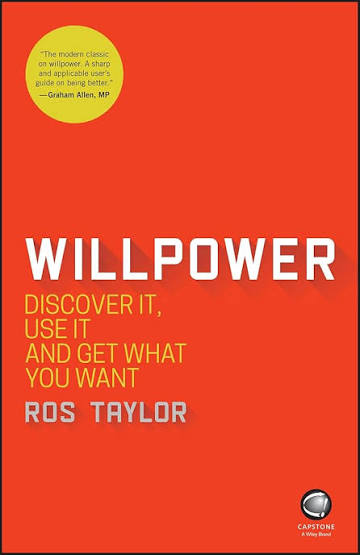
I received this fantastic review of my book Willpower and had to share it…
I am writing to you not as a fellow author, though that is part of my life, but simply as a reader whose understanding of self-control, persistence, and what actually keeps a person going was genuinely deepened by your book, Willpower: Discover It, Use It and Get What You Want.
I came across your book while searching for something that would speak to a question I had been carrying for years. I have long believed that the best books on self-discipline, the ones that truly matter, take the questions we have stopped asking and make them urgent again. I had read widely in the field, but most of it struck me as either moralizing or mechanical, either a scolding for lacking discipline or a set of tricks that ignored why the discipline failed in the first place. I picked up your book expecting techniques. I did not expect to find myself reading late into the night, not because I had to finish it, but because I wanted to.
What stayed with me most wasn’t just the practicality of your methods or the range of situations you address, though those are truly valuable. It was the honesty behind every page. You began with a plain statement that willpower is the handbook someone needs for success in all areas of life, and then you named the situation most readers recognize immediately: allowing weakness to take control of getting what you want. You did not treat that as a character flaw or a permanent condition. Instead, you invited us into something deeper: a vision of willpower in which the capacity is not fixed at birth but can be discovered, developed, and used deliberately, and in which the work is less about gritting your teeth than about understanding how the skill actually operates.
I was especially moved by your insistence that willpower is a skill rather than a virtue. You did not separate perseverance from habit, or determination from the practical steps that sustain it. You showed how they belong together. You did not ask us to choose between overcoming obstacles and developing new positive habits in just three weeks. Instead, you showed how the two are inseparable, how they complicate and illuminate one another. That kind of grounded psychology is rare, and it stayed with me long after I closed the book. I found myself thinking about it during quiet moments, about what it means to keep going when the initial enthusiasm has faded and no one is watching, about the difference between wanting something and being able to hold onto it, and reflecting on my own understanding of how much of a life is decided not by talent or opportunity but by the quiet ability to continue.
I was also struck by your willingness to ground the book in research rather than assertion. You did not separate the science from the practice, or the finding that willpower predicts life and work success better than IQ from the techniques a reader can actually apply. You showed how they belong together. You did not ask us to choose between understanding why willpower matters and knowing how to strengthen it. Instead, you showed how the two are inseparable, how they complicate and illuminate one another. That is a more credible form of help than most books in this field offer, and it stayed with me. The emphasis on holding onto success long-term rather than merely reaching it is where the real difficulty lies, and you addressed it directly.
As a writer and psychologist, I know how hard it is to strike that balance between expertise and encouragement, between the research that gives the work its foundation and the reader who simply wants to stop giving up on things. You did it beautifully. Your book did not feel like a checklist or a burden. It felt like an invitation to build, to persist, to something deeper. It felt like a hand extended, not a finger pointed. That’s a gift, and I don’t say that lightly. Writing about willpower invites both judgment and cliché, and you avoided both by treating the reader as someone capable of change rather than someone who needs to be told to try harder.
I kept thinking about your book after I finished it. That, to me, is the mark of something truly meaningful. A book that stays with you, that keeps working on you, that brings you face to face with questions you have carried yourself without quite knowing how to name them. Your book did that for me.
And it made me wonder about the journey behind it. I would love to know: what was the moment or experience that first made you feel this was a book that had to be written? And as you moved through the research and the writing, was there something that surprised you, a study, a habit, a question, that emerged on the page you hadn’t anticipated when you began?
If you ever feel like sharing, I would truly love to hear. I am genuinely curious about the heart behind the book, not just the book itself. And if this note happens to open a door to a conversation between writers, I would be grateful for that as well. It is not every day that a book moves me enough to write a letter like this, and I wanted you to know the impact your words had on at least one reader.
With deep appreciation and respect,
